
DiginamiX — E-Commerce Strategy
A Guide to the Best Courier Services in South Africa for 2026
Updated April 2026 | 10 min read
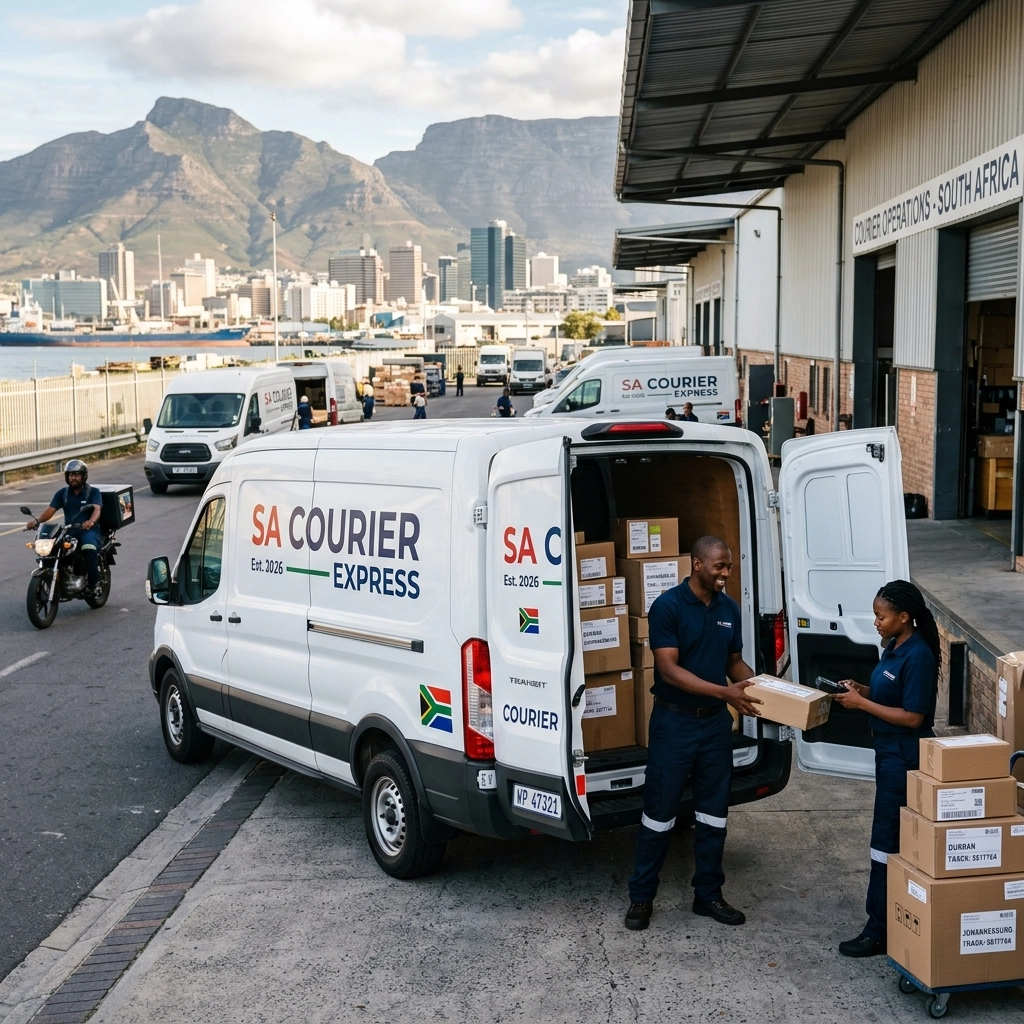
Logistics in South Africa for 2026 is no longer just about moving a box from point A to point B. It is a strategic lever that determines whether your e-commerce venture thrives or fails. In a market where customer expectations for speed are at an all-time high, your choice of courier partner is the most visible part of your brand.
South African business owners face a complex landscape. You must balance rising operational costs against the need for competitive shipping rates. If your logistics strategy is not optimised, your margins will vanish. This guide filters the noise to provide the most important insights for navigating the current courier market.
Navigating the 2026 Fuel Crisis and Price Surcharges
The recent volatility in global energy markets has hit the South African logistics sector hard. April and May 2026 saw significant fuel price increases that forced immediate adjustments across the industry. This is a critical factor you cannot ignore when pricing your products.
Most major couriers have implemented or increased fuel surcharges to remain operational. The Courier Guy currently maintains a 12% fuel surcharge on its standard rates, adjusted monthly. What this means for you is that a "flat rate" is rarely truly flat. You must build a buffer into your shipping costs or use dynamic shipping calculators to ensure you are not losing money on every delivery.
Transparency with your customers is essential. If you do not explain why shipping costs have fluctuated, you will lose their trust.
The Courier Guy and the Domination of Local Delivery
The Courier Guy remains the undisputed heavyweight of the South African domestic market. Recent data shows that over 75% of local businesses include them in their top three logistics partners. Their network of over 200 kiosks and 22 depots provides a level of reach that is difficult to match.
Their reliability is their primary selling point. They offer a variety of services ranging from same-day express to economy freight. For a small business, their prepaid portal is an excellent starting point, allowing you to manage shipments without a massive upfront contract.
However, reliability comes at a price. With the 12% surcharge and base rate increases, you are looking at roughly R100 to R130 for a standard flyer-sized parcel between major centres. They are the safe choice, but you must monitor your volume to negotiate better rates as you scale.
Aramex and the Convenience of Store to Door
Aramex continues to be a favourite for small business owners who need a simple, predictable solution. Their Store-to-Door courier bag, available at major retailers like Pick n Pay and FreshStop, is a staple of the local market.
As of 2026, the Aramex Store-to-Door service is priced at approximately R100 for a sleeve that fits up to 2kg. You do not need to wait for a driver to arrive for a collection — drop off your parcels whenever the retail store is open. This flexibility is vital for entrepreneurs who are still balancing a side hustle or do not have a dedicated dispatch office. The downside is the lack of on-demand pickup, which can slow down your fulfilment cycle if you are not disciplined.
Smart Lockers and Retail Points for Budget-Conscious Businesses
The rise of the click-and-collect model has changed the game for price-sensitive customers. If your shoppers are watching every rand, you cannot afford to ignore Pudo, Pargo, and Paxi.
Pudo and the Smart Locker Revolution
Pudo, powered by The Courier Guy, utilises a massive network of smart lockers. It is often the most cost-effective way to send a parcel in South Africa today. Rates for locker-to-locker delivery start as low as R60 for a small package. This service is perfect for customers who are not at home during the day — they collect their parcel at their own convenience from a secure locker. For your business, this reduces the risk of failed delivery attempts, which can incur extra costs.
Pargo and Paxi for Deep Reach
Pargo utilises a network of pickup points in established retail stores, particularly effective for reaching customers in areas where traditional door-to-door couriers struggle or charge a premium.
Paxi, operated through PEP stores, is the go-to solution for the widest possible demographic. With over 2,800 points across the country, Paxi allows you to send a parcel for approximately R60 to R100 depending on the size and speed. While it is not the fastest service, its footprint is unmatched. If your target market is the everyday South African consumer, Paxi is a mandatory option on your checkout page.
FastWay Couriers for Budget-Friendly SME Shipping
FastWay Couriers is worth a close look if you are trying to protect margin without sacrificing national reach. Their model is built around volume-based pricing, which makes them particularly attractive for SMEs shipping consistently. Their Johannesburg hub can process more than 6,000 packages per hour, which helps them move higher volumes faster while keeping pricing competitive. If you are a smaller business looking for a practical middle ground between affordability and scale, FastWay is one of the smarter options on the list.
PostNet for Simple Counter-Based Delivery
PostNet remains useful for businesses that want flexible service without a full courier account. Their network supports both counter-to-counter and counter-to-door delivery, which is helpful if you want customers or staff to drop parcels at a branch instead of waiting for collections. Pricing starts at around R99 for entry-level shipments. If your business needs a familiar retail footprint and straightforward handover, PostNet is still a practical choice.
Shipping to Townships and Regional Surcharges
A major hurdle for South African e-commerce is the cost of delivery to townships and outlying areas. Many courier companies categorise these as high-risk or regional zones. Standard surcharges for these areas currently range from R100 to R150 on top of the base shipping rate, which can easily double the cost of a delivery.

You must decide whether you will absorb these costs, pass them to the customer, or use a service like Paxi or Pargo to bypass the surcharge. Using retail pickup points is often the best way to serve these communities without making the shipping cost more expensive than the product itself.
Amazon South Africa Fulfilment and FBA Costs
With Amazon now fully established in the South African market, many sellers are moving to Fulfilment by Amazon (FBA). As of April 2026, Amazon has introduced a 3.5% fuel surcharge on FBA fees. Despite this, they are running a promotion offering a flat 5% referral fee for many categories until March 2027.
Using FBA can improve your conversion rates because customers trust Amazon's delivery infrastructure. However, you are surrendering a significant portion of your margin to their ecosystem. It is a trade-off between volume and profitability that you need to model carefully before committing.

International Shipping with DHL, FedEx, and DSV
If you are looking to expand beyond South African borders, your options narrow to the global giants. DHL Express remains the market leader for international shipping in South Africa, preferred by nearly half of all businesses shipping cross-border.
FedEx and UPS are the primary competitors, all implementing significant rate increases in January 2026. DSV XPress is a serious option for structured global coverage through one provider. However, DSV XPress fuel surcharges reached 25% for exports and 29% for imports in early 2026, meaning your landed cost can shift quickly even when the base shipping quote looks reasonable.
For international shipping, you are not just paying for transport. You are paying for customs expertise. DHL is widely considered the most efficient at clearing South African exports through international customs. If you are shipping high-value items to Europe or the USA, the premium price for DHL, FedEx, or DSV is usually worth the peace of mind.
Courier Comparison Summary for 2026
You do not need one courier. You need the right mix.
| Provider | Best For | Typical Cost | Watch-Out |
|---|---|---|---|
| The Courier Guy | Reliable domestic door-to-door | R100–R130 (standard flyer) | 12% fuel surcharge |
| Aramex | Drop-off convenience for SMEs | ~R100 up to 2kg | No on-demand collection |
| Pudo | Lowest-cost locker delivery | From ~R60 | Requires locker collection |
| Pargo | Retail pickup point coverage | Varies by route | Less suitable for urgent delivery |
| Paxi | Deep national reach via PEP | ~R60–R100 | Slower than premium couriers |
| FastWay | Budget SME shipping with scale | Volume-based | Final cost depends on volume |
| PostNet | Counter-to-door convenience | From ~R99 | Less competitive at high volumes |
| DHL Express | International speed and customs | Premium | High cost for lower-value items |
| DSV XPress | Structured international shipping | Base rate + variable surcharge | 25% export / 29% import surcharge (early 2026) |
| Amazon FBA | Marketplace-led fulfilment | 3.5% fuel + 5% referral fee | Reduced margin and brand control |
Diagnostic: Choosing the Right Courier for Your Business
Use this quick audit to evaluate your needs:
- Is price your primary concern? Use Pudo or Paxi for locker-to-locker or point-to-point delivery.
- Want a budget courier that scales with you? FastWay Couriers is worth testing for its volume-based pricing.
- Need the highest domestic reliability? The Courier Guy is your best bet.
- Shipping to remote or high-risk areas? Use Pargo or Paxi to avoid heavy door-to-door surcharges.
- Want branch-based convenience? PostNet works well for counter-to-counter or counter-to-door deliveries.
- Shipping internationally? DHL Express leads on speed and customs clearance; DSV XPress is a strong structured alternative if you can absorb variable surcharges.
- Want to set and forget your logistics? Consider Amazon FBA if your margins allow for the referral fees.

Optimising Your Logistics for Growth
Logistics is a moving target in 2026. The businesses that win are those that provide multiple shipping options at checkout. Your e-commerce platform must include a robust shipping engine that can handle various providers and surcharges in real-time. Do not let shipping become an afterthought. It is a core part of your value proposition.
Need Help Building a Multi-Courier Checkout?
DiginamiX can help you build an e-commerce platform that handles the heavy lifting of logistics, allowing you to focus on growing your brand.
Talk to DiginamiXThe fuel crisis is a challenge, but with the right strategy, it is also an opportunity to outmanoeuvre competitors who are slower to adapt. Take the time to audit your current shipping costs today.
Frequently Asked Questions
Which is the best courier service in South Africa for small businesses?
The best courier depends on your priorities. The Courier Guy offers the most reliable door-to-door delivery. Pudo and Paxi offer the lowest rates from roughly R60 per parcel. FastWay offers volume-based pricing that improves as order numbers grow. Most e-commerce businesses benefit from using two or three services to cover different customer needs.
How much does courier delivery cost in South Africa in 2026?
The Courier Guy charges roughly R100 to R130 for a standard flyer between major centres plus a 12% fuel surcharge. Aramex Store-to-Door is around R100 for up to 2kg. Pudo and Paxi start from approximately R60. PostNet starts around R99. DHL Express international rates are premium and depend on destination and weight.
How do I deliver to townships affordably in South Africa?
Standard door-to-door couriers typically add R100 to R150 in regional surcharges for township deliveries. The most cost-effective alternative is to use Paxi (via PEP stores) or Pargo (retail pickup points), which bypass the surcharge and allow customers to collect at a nearby store.
Is Amazon FBA worth it for South African sellers in 2026?
Amazon FBA offers excellent fulfilment reliability but comes with a 3.5% fuel surcharge on FBA fees and referral fees of approximately 5% in many categories until March 2027. It works well for sellers with sufficient margins who want to reduce logistics management overhead.
Which international courier is best for South African exporters?
DHL Express is widely preferred for its customs clearance expertise and speed. DSV XPress is a structured alternative for global coverage, though its early 2026 fuel surcharges reached 25% for exports and 29% for imports, which can shift landed costs significantly.