DiginamiX — E-Commerce Strategy
A Guide to BNPL Products and Offers for South African Merchants
Updated April 2026 | 9 min read
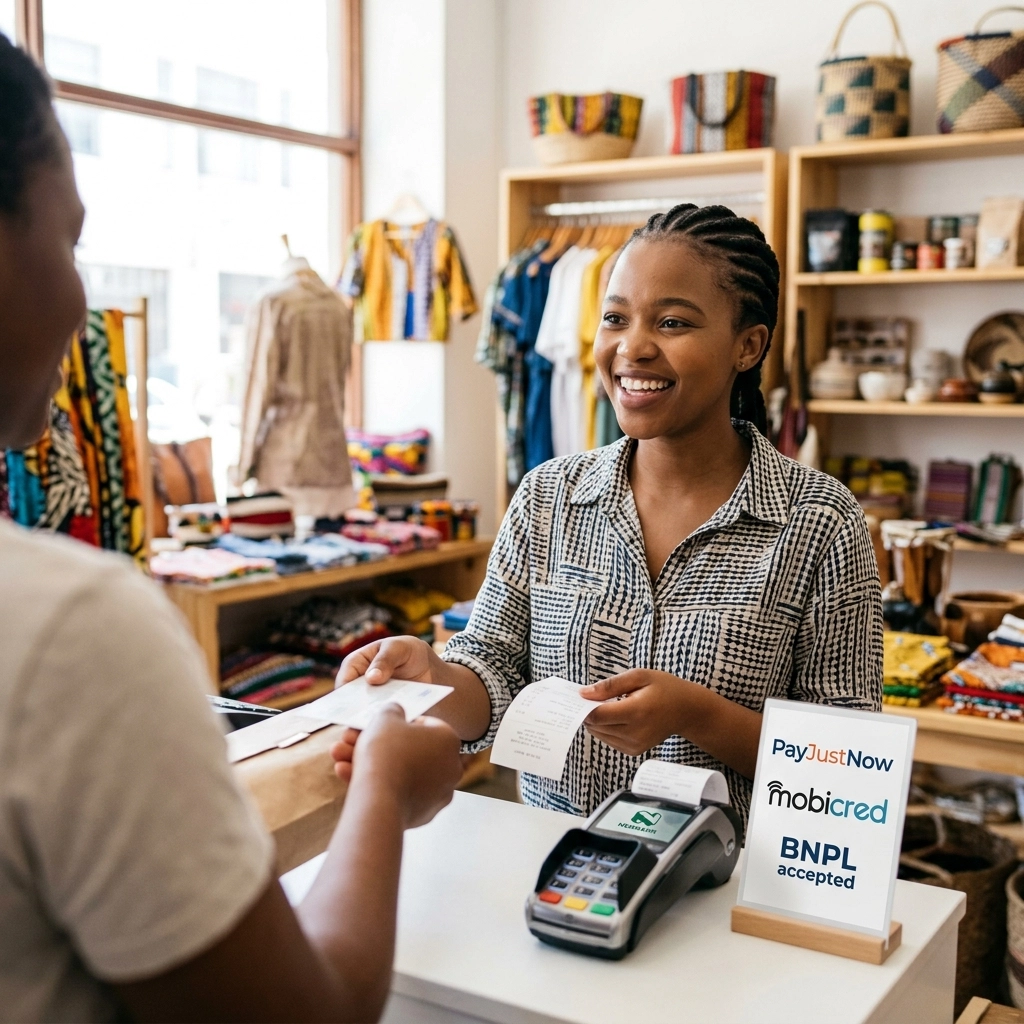
The South African retail landscape in 2026 is unrecognisable compared to a decade ago. High interest rates and a squeezed middle class have forced a pivot in how people buy. Traditional credit is expensive and bureaucratic. Consumers now demand flexibility without the sting of compound interest.
Buy Now Pay Later (BNPL) has stepped into this gap. It is no longer a niche payment experiment for tech-savvy youngsters. It is a fundamental requirement for any merchant who wants to maintain a healthy conversion rate. If you do not offer a way for your customers to split their payments, you are essentially handing your sales to a competitor who does.
This guide explores the BNPL products and offers available in South Africa and provides the granular detail you need to decide which provider fits your business model.
Free Download
BNPL for South African Merchants by DiginamiX
Download the full presentation covering all major BNPL providers, merchant fees, integration tips, and regulatory context in one shareable PDF.
How BNPL Works for Merchants
The most common misconception is that BNPL is just another form of credit that the merchant has to manage. This is incorrect. For you, the merchant, the process is remarkably simple and low-risk.
When a customer chooses a BNPL option at your checkout, the provider pays you the full purchase price upfront. This settlement usually happens within a few business days. You do not wait for the customer to finish their instalments to get your money.
What is the catch? The BNPL provider takes a commission on the transaction. This fee is higher than standard credit card processing fees. However, the provider takes on 100% of the fraud and default risk. If the customer fails to pay their second or third instalment, that is the provider's problem, not yours.
You are trading a small percentage of your margin for a guaranteed, immediate sale and zero debt-collection headaches.

Key Benefits of Integrating BNPL Into Your Store
You might hesitate at the higher transaction fees. Before you dismiss the model, look at the data. BNPL is a powerful tool for driving specific consumer behaviours that directly impact your bottom line.
Improved Conversion Rates
Cart abandonment is the silent killer of online retail. Often, a customer wants the product but cannot justify the full hit to their bank account today. By offering three or four interest-free instalments, you remove the primary barrier to the "Buy" button. Merchants globally report conversion rate increases between 20% and 30% after implementing BNPL.
Higher Average Order Value
When a customer knows they can split a R4,000 purchase into four payments of R1,000, they are far more likely to add that extra item to their cart. This psychological shift moves the focus from the total cost to the monthly affordability. In the South African market, average order values (AOV) have risen by as much as 50% for high-end electronics and fashion after BNPL integration.
Access to New Demographics
Many younger South Africans are credit-averse. They do not want credit cards with high interest rates and hidden fees. BNPL providers like PayJustNow and Payflex offer a transparent alternative. By listing your business in their merchant directories, you gain access to a pre-vetted pool of thousands of active shoppers.
If you are looking to capture this audience, ensuring your digital platform is ready is the first step. You can view our website development in Johannesburg to see how we build high-converting e-commerce environments.
Detailed Overview of the Major BNPL Players in South Africa
The South African market has matured rapidly. There are now several distinct products, each with a slightly different hook for the consumer and the merchant.
PayJustNow
PayJustNow is one of the most popular home-grown solutions. Their model is built on simplicity. The customer pays in three equal instalments. The first is paid at the time of purchase, and the following two are scheduled for the next two months. They do not perform a traditional hard credit check. Instead, a proprietary algorithm determines affordability, making them accessible to a broad range of consumers.
Payflex
Payflex is a dominant force in the local market. Their standard offer is four instalments over six weeks. The customer pays 25% upfront and the remaining 75% every two weeks. This rapid payment cycle is popular with merchants who sell fast-moving consumer goods or fashion. Payflex has a massive user base and a very polished merchant portal that provides deep insights into customer spending habits.
Float
Float is the disruptor in the space because it works differently. It does not issue new credit. Instead, it uses the existing credit limit on a customer's credit card, rolling the purchase into interest-free instalments by placing a temporary hold for the full amount and only charging the monthly instalment. This is a particularly effective solution for high-ticket items like furniture or high-end tech.
Happy Pay
Happy Pay has gained traction by aligning its payment dates with South African pay cycles. Their "pay in two" model is specifically designed to bridge the gap between paydays. This lower-friction model is excellent for smaller transactions where a three-month commitment might feel excessive for the shopper.
ZeroPay and MoreTyme
ZeroPay offers a flexible three-pay or X-pay model depending on the purchase value. MoreTyme, backed by TymeBank, allows customers to pay in three interest-free instalments via their banking app. Because MoreTyme sits inside a banking ecosystem, the trust factor is very high for older or more conservative shoppers.
Merchant Fees and What You Need to Know
You cannot ignore the cost. While standard credit card processing might cost you between 2.5% and 3.5%, BNPL commissions typically range from 4% to 7% per transaction.
View this fee as a combined cost of processing, marketing, and insurance. The BNPL provider is bringing you a customer, ensuring you get paid, and absorbing the risk of non-payment. If your gross margins can absorb a 5% or 6% fee, the volume increase usually makes the decision straightforward.
However, you should audit your product categories first. If you are selling low-margin items where you only make 10%, a 6% BNPL fee will destroy your profitability. In those cases, consider setting a minimum order value for BNPL transactions to ensure the numbers still work in your favour.
Technical Integration and the Role of Your Website
Integrating these BNPL products and offers available in South Africa is generally straightforward if you are using modern e-commerce platforms like Shopify, WooCommerce, or Magento. Most providers offer plug-and-play modules.
However, the way you display these options matters significantly. If a customer only discovers they can pay in instalments at the final checkout page, you have missed the opportunity to influence their shopping behaviour earlier in the journey.
Effective merchants display the "Pay as little as R250 per month" snippet directly on the product page. This transparency reduces price shock immediately. If your current site cannot handle these dynamic displays, it might be time to look at a website design upgrade in Midrand to improve your user experience.

The Regulatory Context in South Africa
As a merchant, you must understand the legal framework. Most BNPL products in South Africa are structured to fall under the Consumer Protection Act (CPA) rather than the National Credit Act (NCA).
Because the products are interest-free and do not charge credit fees in the traditional sense, they are not classified as credit agreements in the same way a personal loan would be. This is why the sign-up process for customers is so fast.
However, regulators are watching the space closely. In 2026, there are increasing calls for responsible lending checks to prevent consumers from over-extending themselves across multiple BNPL platforms. As a merchant, you are protected from this liability, but staying informed helps you choose partners who value ethical lending practices.
Warning Signs in Your Current Checkout
How do you know if you are losing money by not having BNPL? Look for these signals in your analytics:
- High cart abandonment rates on items priced over R1,500.
- A stagnant average order value despite rising inflation.
- Customer enquiries asking about lay-by or payment plans.
- Competitors in your niche featuring BNPL logos prominently on their homepages.
If you see these signs, you are already behind the curve. The shift is not coming; it is already here.
Your Next Steps for Implementation
Do not try to integrate every single provider at once. This creates choice paralysis for your customers. Pick one or two that align with your target demographic.
- Analyse your margins. Determine the maximum commission fee your business can realistically afford.
- Review your customer base. Are they credit card users (Float) or do they prefer debit-based instalments (Payflex, PayJustNow)?
- Check your platform compatibility. Ensure your website can support the integration without slowing down page load speeds.
- Market the offer. Once integrated, use your social media management channels to let your audience know they can now shop interest-free.
Not Sure Which BNPL Provider Fits Your Business?
DiginamiX helps South African businesses navigate the intersection of technology and consumer psychology to ensure every click has the best chance of becoming a sale.
Talk to DiginamiXBNPL is more than a payment button. It is a strategic tool for growth in a challenging economy. Use it wisely, and you will see your business thrive while others struggle to close the deal.
Frequently Asked Questions
What is BNPL and how does it work for South African merchants?
BNPL (Buy Now Pay Later) allows customers to split purchases into interest-free instalments. The provider pays the merchant the full amount upfront within a few business days. The merchant pays a commission of roughly 4–7% per transaction in exchange for guaranteed payment and zero default risk.
Which BNPL providers are available in South Africa?
The main options include PayJustNow (3 equal instalments), Payflex (4 instalments over 6 weeks), Float (uses existing credit card limits), Happy Pay (pay in two, aligned to pay cycles), ZeroPay, and MoreTyme backed by TymeBank.
What fees do merchants pay for BNPL?
BNPL merchant fees typically range from 4% to 7% per transaction, compared to 2.5–3.5% for standard credit card processing. The higher fee covers payment processing, customer acquisition, and the provider absorbing all default and fraud risk.
Is BNPL regulated under the National Credit Act in South Africa?
Most BNPL products fall under the Consumer Protection Act rather than the National Credit Act, because they are interest-free and do not charge traditional credit fees. Regulators are increasingly scrutinising the sector around responsible lending practices.
How do I know if my business needs BNPL?
Warning signs include high cart abandonment on items priced over R1,500, a stagnant average order value despite rising inflation, customer enquiries about lay-by or payment plans, and competitors featuring BNPL logos prominently on their websites.